
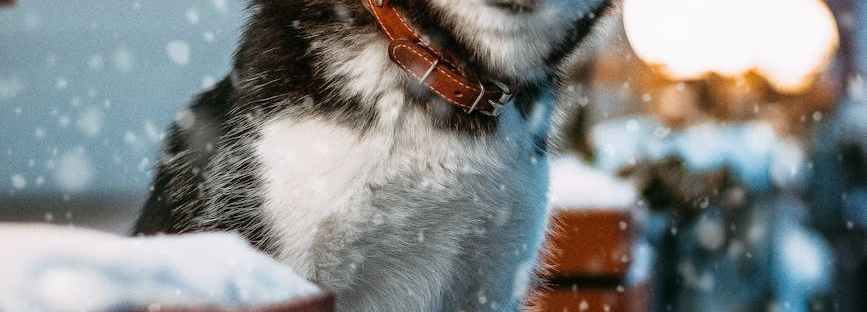
Winter is the best time of year to snuggle with your furry friends by the fire. Nearly than 70% of Americans live in an area that gets regular snowfall. Since the pandemic, the number of households that have a pet has also skyrocketed, which means many pets live in areas that receive major snowfall. Uness you have a dog that was bred to shelter in cold climates like a Husky or a Burmese Mountain Dog it also means your furry companion might be colder than you this winter, but they don’t have to be. Don’t let the snowfall keep you guys indoors all winter! Follow these tips to keep your beloved companions warm.
- Understanding your dog’s cold tolerance
- Dress Appropriately
- Protect Paw Pads
- Provide Shelter
- Limiting Outside Time
- Ensure Proper Diet
- Watch out for Hypothermia
- Conclusion
Understanding your dog’s cold tolerance
Some breeds are meant for the snow and the cold and harsh climates, such as the Siberian Husky. These double coated breeds have so much fluff and undercoat that they can stay warm for much longer than most other double coated breeds. Other double coated breeds, such as the Golden Retriever, might stay warmer than, say, single coated breeds, but will not be able to withstand the harsh environment like the Husky will. Other breeds, like the Chihuahua, won’t have as much of a cold tolerance, and will be at greater risk for developing hypothermia and frostbite much faster. Breeds meant for winter include but are not limited to:
- Siberian Husky
- Alaskan Malamute
- Keeshond
- Newfoundland
- Norwegian Elkhound
- Tibetan Mastiff
- Saint Bernard
- Burmese Mountain Dog
- Great Pyrenees
- And more!
In these cases, your dog may not need a sweater. However, any other breed that wasn’t bred specifically for the cold and the snow may need a sweater, depending on the environment you come from.
Some parts of the Southwest may not need to take a lot of precautions in cold weather, like in Phoenix where the weather is often a cool 50 degrees in the winter, but a place like Michigan or Alaska, you’ll definitely need a sweater in the very least.
Dress Appropriately
Dogs benefit from cozy sweaters just like we do. We even have ugly sweaters for dogs, cute ones, and ones to dress them up and we have heavier jackets to keep them warm during snowfall. In many cases, depending on the breed of dog, if you’re cold then Fido is too! You can often find dog sweaters and jackets at your local pet store.
Protect Paw Pads
Often when I think of booties, I think of summertime, but booties are also useful to protect your pup’s paws in cold weather too. They keep your pup’s paw pads from cracking, much like how our lips crack in winter, and can add traction.
Just like how our lips can get cracked and dry in winter, dog’s paw pads and nose are especially susceptible to the cold and can become cracked as well. You should keep some paw balm on hand! Paw balm can be used on the paw and nose. Some dogs don’t like it, my own dog, Bear, HATES paw balm as much as I hate ChapStick. He’ll start licking his paws raw. To avoid this, it’s best to apply the balm as they’re sleeping to start with or, according to Vetstreet, you can also use an inflatable donut or the “cone of shame” to keep them from licking their paws, similar to how you would treat your pup’s hotspot.
Provide Shelter
Creating a warm environment for your pup isn’t hard. Wild wolves today often create warm dens and snuggle together to keep warm, and your dog needs just the same kind of environment. If your dog is primarily kept outside, you need to provide shelter from the snow in the form of a doghouse. You may need to consult what your state laws say you need to provide for a comfortable winter, and when they say to bring your dog inside!
For example: in Michigan, once the temperature reaches 32 F (0 C) you can’t allow your dog to be tethered outside for more than 30 minutes, or else you could be facing a $15k fine and/or jailtime with animal cruelty charge, unless you have provided your dog with the most adequate ways to stay warm.
In most cases, you should provide adequate unfrozen water, plastic feeding bowls, waterproof burlap to hang in the doorway, and enough straw and other beddings to keep your pup off of the frozen ground. Otherwise, bringing your pup inside and maybe install a doggy door to allow free access for them to come and go, just keep an eye out for how long they’ve spent outside.
Limiting Outside Time
Even if you have a dog that you keep outside all the time, it’s still best to bring in your dog whenever possible to protect your dog from the cold. Some dogs are stubborn and will come in when they want to. If your dog isn’t bred for the cold weather, it’s best to lure them inside with their favorite treat or toy. In the very least you should monitor your stubborn pup and make sure they have a way to escape the harsh winter weather such as through a doggy door.
Obviously, if you live in an apartment, you’ll need to have some outdoor time, but by dressing your dog appropriately you and your pup can enjoy a safe winter walk.
Ensure Proper Diet
When you live in cold environments your body needs more calories to keep warm. Your dog is the same way! You should always consult your vet before increasing your dog’s caloric intake, but the rule of thumb is working dogs or dogs that tend to stay outdoors longer will need more calories than dogs that’ll primarily stay indoors. This doesn’t mean increase the amount of food you’re giving your dog, though, and it doesn’t mean you can increase the amount of human food you’re giving your pup. It’s all about nutrient density, similar to when we humans go on a diet. I’m sure your doctor has told you to eat more nutrient-dense foods, such as that found in veggies. For dogs, these nutrient-dense foods are found in protein and fats. Again, you should consult your vet for the best nutrient-dense foods.
Watch out for Hypothermia
Just like us, dogs get hypothermia, even though their warm coats can sometimes protect them from the cold. A dog’s normal body temperature should be between 101-102 degrees F (38.3-39.2 C) but if it drops below this then your dog could be in danger. It’s good to know the signs and symptoms for an early intervention!
Mild hypothermia can occur similarly to humans: uncontrolled shivering and trying to curl up close to you or a warmer area. Other signs to more major hypothermia include:
- increase in heart rate (followed by a sudden slowing in heart rate)
- rapid breathing that may get shallower
- sluggishness
- depression-like symptoms
- dilated pupils
- paleness in skin
- loss of consciousness
Some dogs are more prone to hypothermia than others, regardless of breed, including puppies, senior dogs, short-coated and single coated dogs, and smaller dogs, as all of these dogs lose body heat much quicker.
Mild Hypothermia can normally be treated at home. NEVER TREAT HYPOTHERMIA WITH HOT OR WARM WATER as this can cause a major shock to their system. The best method is to bring your dog to a warm spot (indoors and on a bed), with insulated blankets (not heated blankets), and making sure they’re near a heat source, as long as they have protective layers.
More severe hypothermia will require warm IV’s that can be administered by a vet quickly.
Conclusion
Wintertime doesn’t mean you and your pup have to be stuck indoors. There’s lots to do and your pup loves to go on adventures with you and your friends and family. By ensuring the proper precautions such as dressing appropriately, providing appropriate shelter and ensuring a nutritious diet are all a great start to enjoying the snow with your furry companion!
As we venture further and further into the snowy season, we can work together to keeping our furry companions warm and happy. Share your tips and tricks that I may have missed in the comments below.
Have a safe winter, everyone!

 ADHDoggo